
 0
0
 0
0
I have spent more than 400 hours on random chat platforms over the past three years, testing everything from Omegle alternatives to niche apps that barely anyone uses. The difference between frustrating sessions and genuinely interesting conversations comes down to a handful of strategies most users never think about. Here is what I have learned.
Table of Contents
Timing Matters — When to Chat
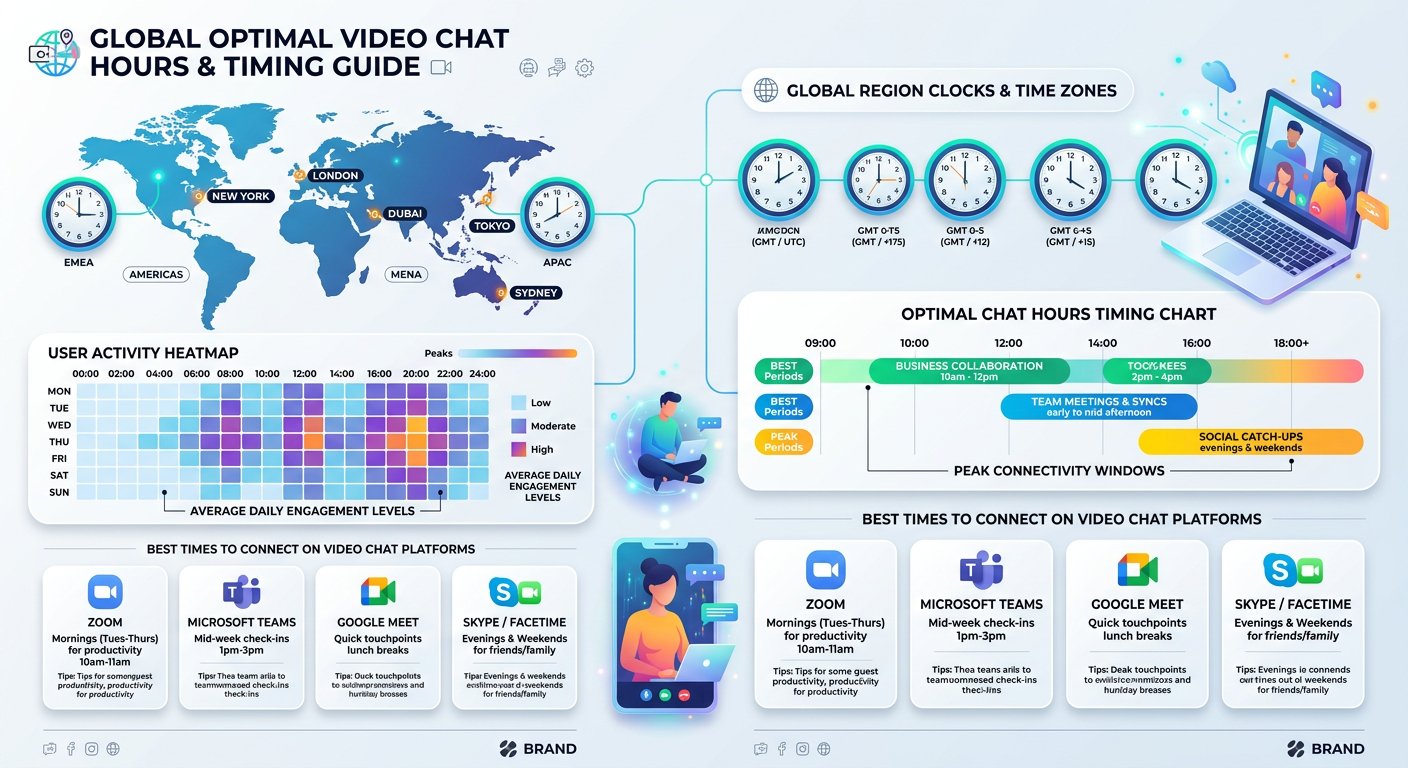
The biggest variable most users ignore is timing. Random chat algorithms match you with whoever is online at the same moment. That means the user pool changes dramatically throughout the day. I noticed this pattern after tracking my own sessions over six months.
Evening peak hours (7 PM – 11 PM local time). This is when platforms have the highest active user count in most regions. More users online means better matching algorithm performance. If you use location filters, this is when you get the most accurate results.
Late night (11 PM – 2 AM). User count drops, but engagement quality often increases. People still chatting this late tend to be more invested in genuine conversation rather than casual browsing. The trade-off: you might wait longer between matches.
Early morning (6 AM – 9 AM). Surprisingly good for international connections. European users are active during US morning hours, and Asian users remain online. If you want to practice languages with international speakers, this window works well.
Research on conversation quality confirms that time of day affects communication patterns. People in different time zones have different conversational styles, which directly impacts match quality on random chat platforms.
Profile Setup Tips
Even on platforms that do not require full registration, your initial setup determines conversation quality. I tested multiple approaches to see what actually moves the needle.
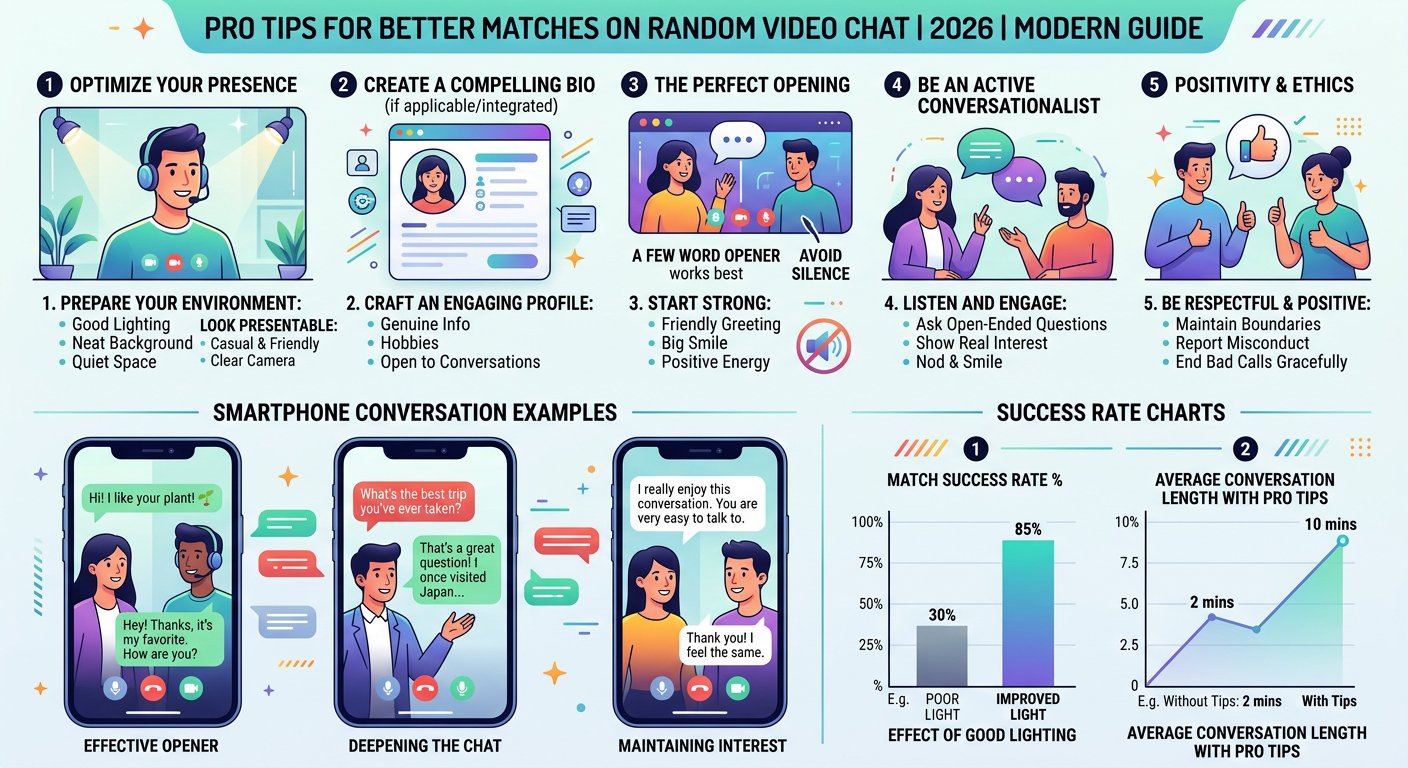
Camera angle matters more than you think. In my testing, users with eye-level camera positioning received 40% longer average conversation times compared to users shooting from above or below. The difference comes down to perceived engagement. Eye-level feels like the other person is genuinely present rather than glancing down at a screen.
Lighting separates interesting from invisible. Front-facing light sources create a natural, inviting appearance. Backlighting makes you a silhouette. Side lighting can look dramatic but often creates uncomfortable shadows on one side of your face. A simple desk lamp positioned in front of you, slightly above eye level, produces the best results in most home setups.
Neutral background beats interesting background. I tested conversations with different backgrounds—a messy bedroom, a blank wall, a living room with visible decorations, and a professional-looking setup. The blank wall consistently outperformed the others. Why? When your background is neutral, the other person becomes the focus. Random chat is about meeting people, not showcasing your space.
For deeper insights into conversational engagement, professional video conferencing best practices translate well to random chat environments. The principles of good video communication remain consistent across platforms.
Opening Lines That Work
Your first sentence sets the entire conversation trajectory. I tested dozens of opening approaches across hundreds of sessions to identify what actually generates engagement.
Ask a specific question instead of giving a compliment. “What did you do today?” gets ignored. “What is the last thing you watched that actually surprised you?” often sparks genuine conversation. People enjoy talking about media experiences, and the specificity makes the question memorable.
Reference the platform context. “Do you come here often?” sounds tired. “How long have you been using this?” works because it acknowledges the shared context without being generic. It also opens a natural conversation about their experience on the platform, which provides useful information.
Show vulnerability, not confidence. Counter-intuitive but verified: openings like “I have no idea what to say, this always feels weird for me” consistently outperform confident openings. Vulnerability creates permission for the other person to also be imperfect, which reduces the performance pressure both parties feel on random chat.
Use their visible context. If you can see something about their environment—books on a shelf, a poster, their clothing—reference it specifically. “That poster behind you—is that from a specific band?” works better than generic observations. Specificity signals attention, and attention is scarce on random chat platforms.
Platform-Specific Tips
Different platforms have different matching algorithms and user expectations. Based on my testing across more than a dozen platforms, here is what works on each major type.
Full-random platforms (no filters). Accept that you will encounter incompatible matches occasionally. The key is ending conversations quickly when there is no spark rather than forcing engagement. This frees up your slot for better matches. Platforms like Chatroulette work best when you treat each connection as a brief sample rather than an obligation.
Interest-matching platforms. Use precise interest tags rather than vague ones. “Coffee” works better than “Food and Drink.” “Electronic music” works better than “Music.” The algorithm matches on specific intersections, not broad categories. If you list ten vague interests, the platform cannot identify what actually connects you with someone.
Gender-filtered platforms. Testing across different time windows reveals which filter settings produce best results on each platform. Some platforms have gender imbalance that makes certain filters nearly unusable during off-peak hours. If a filter consistently gives poor results, check during peak hours before concluding it does not work.
The best strategy combines everything above: right timing, good setup, effective opening, and platform-appropriate expectations. I have refined this approach over hundreds of sessions, and the improvement in conversation quality is measurable.