0
0
 0
0
Omegle was once the go-to destination for anyone looking to chat with strangers online. Launched in 2009, the platform connected millions of users worldwide through anonymous text and video chats. But in November 2023, after 14 years of operation, Omegle shut down permanently. So why did Omegle shut down? Let’s break down the full story.
The Timeline of Events
Early Days and Growth
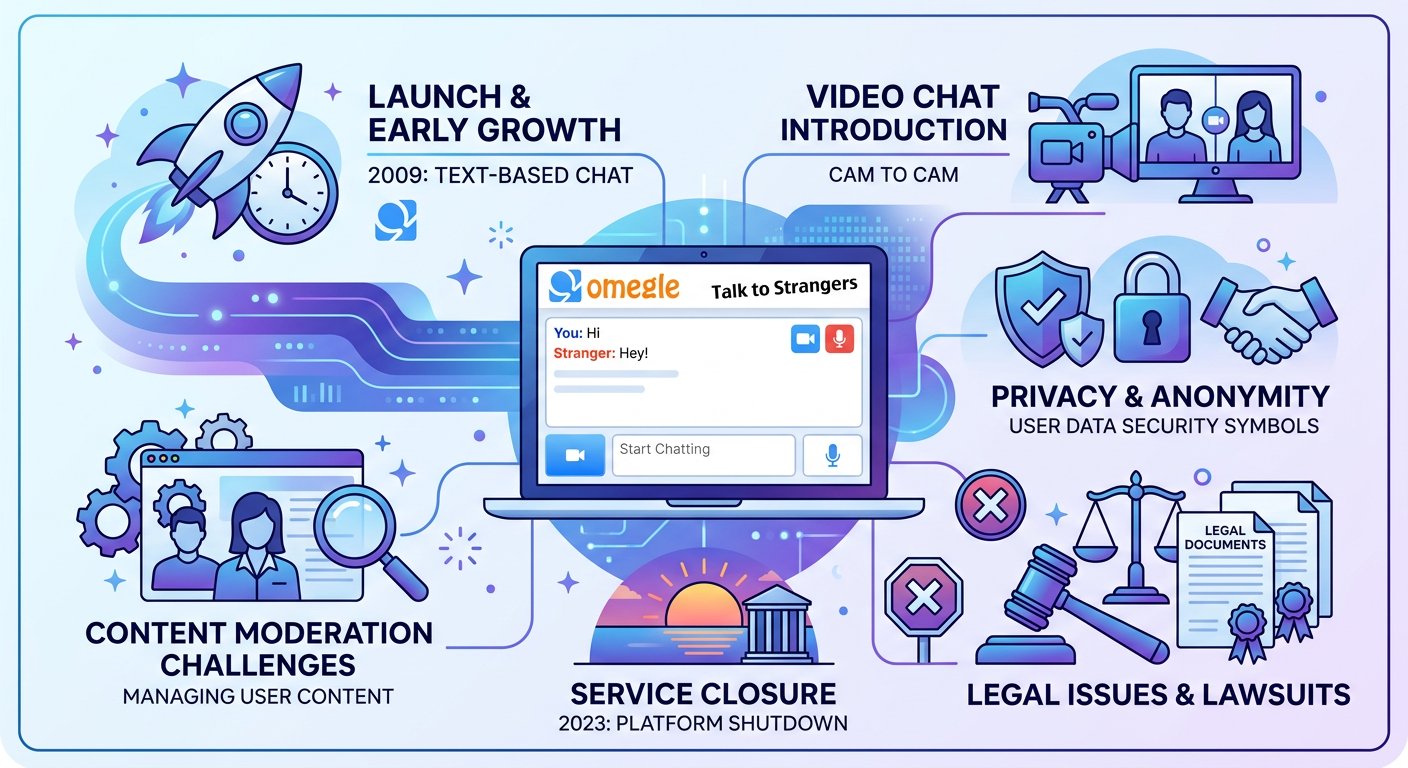
Omegle launched in March 2009, created by then-18-year-old Leif K-Brooks from Brattleboro, Vermont. The concept was simple yet revolutionary: connect random strangers for one-on-one chats without any registration required. Within a month of launch, the site was already getting around 150,000 page views per day.
The platform’s anonymity was its biggest selling point. Users didn’t need to create profiles or share personal information. They could simply click “Chat” and be paired with someone from anywhere in the world. This randomness became a cultural phenomenon, especially among younger internet users.
In March 2010, Omegle introduced video chat functionality, which dramatically increased its popularity. Users could now see and hear their chat partners in real-time, making conversations feel more personal and spontaneous. The platform quickly became synonymous with random video chatting, spawning numerous alternatives and earning a permanent place in internet culture.
Legal Problems Begin
As Omegle grew, so did concerns about user safety. The platform’s anonymity made it attractive not just for genuine connections but also for inappropriate behavior. Reports of harassment, explicit content, and worst of all, predators targeting minors began surfacing.
In 2021, a lawsuit was filed against Omegle by a woman identified as “A.M.” who claimed she was paired with a sexual predator when she was just 11 years old. The lawsuit alleged that the platform’s design enabled her exploitation over a period of three years. The case sought $22 million in damages and highlighted serious gaps in Omegle’s safety measures.
The legal challenges mounted as more cases came to light. According to reports, Omegle was mentioned in over 50 recent cases involving alleged predators. While the platform implemented various moderation tools, including AI-based systems and partnerships with organizations like the National Center for Missing and Exploited Children, critics argued these measures came too late and were insufficient.
Final Shutdown
On November 8, 2023, founder Leif K-Brooks posted a lengthy statement on the Omegle website announcing the closure. In his message, he acknowledged that the platform had been misused by individuals who committed “unspeakably heinous crimes.” He explained that fighting to prevent this misuse had become “no longer sustainable, financially nor psychologically.”

The shutdown came just one week after Omegle settled the $22 million lawsuit with the plaintiff. Reports indicate that the permanent closure was actually a negotiated term of the settlement agreement, allowing the company to avoid an impending jury trial.
What Led to Omegle’s Demise
Safety and Moderation Failures
Omegle’s core design prioritized anonymity above almost everything else. While this created an exciting environment for spontaneous interactions, it also made moderation incredibly difficult. Unlike social media platforms with user accounts and history, Omegle had no way to track problematic users or build safety profiles.
The platform did implement warning messages stating “Predators have been known to use Omegle, so please be careful,” but this disclaimer was later removed. Critics argued that a warning alone was not adequate protection, especially for younger users who might not recognize dangerous situations.
Despite deploying AI moderation tools and cooperating with law enforcement, the sheer scale of misuse proved overwhelming. The platform’s popularity made it a target for bad actors, and the random pairing system offered no safeguards against malicious users.
Lawsuits and Legal Pressure
As detailed by CBS News coverage of the legal challenges, Omegle faced mounting legal pressure that ultimately forced its hand. The high-profile lawsuit filed by A.M. brought national attention to the platform’s safety failures.
According to court documents, the plaintiff was paired with a Canadian man in his thirties when she was 11 years old. This encounter allegedly led to three years of exploitation and blackmail. The lawsuit accused Omegle of negligent design that knowingly allowed the pairing of minors with predators.
The settlement required Omegle to shut down permanently as part of the agreement. Legal experts noted that this was an unusual outcome, with the settlement essentially forcing the company to cease operations rather than pay damages alone.
Competition and Reputation
By the time of its closure, Omegle had lost much of its earlier appeal. Competitors like ChatRoulette, Tinychat, and more recently, various Omegle alternatives had captured market share. But more importantly, the platform’s reputation had been severely damaged by years of negative publicity.
Users increasingly viewed Omegle as an unsafe space, particularly after multiple media reports highlighted exploitation cases. The platform’s association with inappropriate content and safety concerns made it less attractive to mainstream audiences, leaving it with a shrinking user base of primarily those seeking explicit content.
If you’ve been affected by safety concerns on platforms like Omegle, it’s worth reviewing the warning signs on similar chat sites to protect yourself better.
What Now — Where Did Users Go?
With Omegle gone, millions of users were left searching for alternatives. Several platforms have emerged to fill the void, offering similar random chat experiences with varying degrees of safety measures. However, users should approach these alternatives with caution and awareness of the same risks that ultimately led to Omegle’s downfall.
When exploring random chat platforms, it’s important to understand how each service handles moderation and safety. Look for platforms with clear age verification systems, active moderation, and transparent policies regarding user behavior and reporting mechanisms.
Platforms like Emerald Chat and CamSurf have positioned themselves as modern alternatives with improved safety features. Each platform takes a different approach to moderation, so understanding these differences helps users make informed choices.
The key is finding balance between the excitement of meeting new people and maintaining appropriate boundaries while using any random chat service.
FAQ — Omegle Shutdown
When exactly did Omegle shut down?
Omegle officially shut down on November 8, 2023, when founder Leif K-Brooks posted his final announcement on the website.
Why did Omegle shut down?
Omegle shut down following a settlement in a $22 million lawsuit that highlighted the platform’s role in connecting minors with predators. The legal costs, combined with ongoing safety challenges, made continuing operations unsustainable.
Who founded Omegle?
Omegle was founded by Leif K-Brooks, who was just 18 years old at the time of launch in March 2009. You can explore Omegle founding history on Wikipedia for more details about the platform’s origins.
What was the final straw for Omegle?
As reported by The Verge, Omegle shut down after 14 years following settlement of the lawsuit with A.M., which detailed years of exploitation enabled by the platform’s design.
Are there any safe alternatives to Omegle?
Several platforms have emerged as alternatives, but users should research each platform’s safety measures and moderation policies before engaging. Platforms with proper age verification and active moderation tend to offer safer experiences.
Was Omegle involved in other legal cases?
Yes, according to reports, Omegle was mentioned in over 50 recent cases involving alleged predators, making it a significant target for legal action and regulatory scrutiny.